图迈再耀国际舞台:EAU26 头对头研究

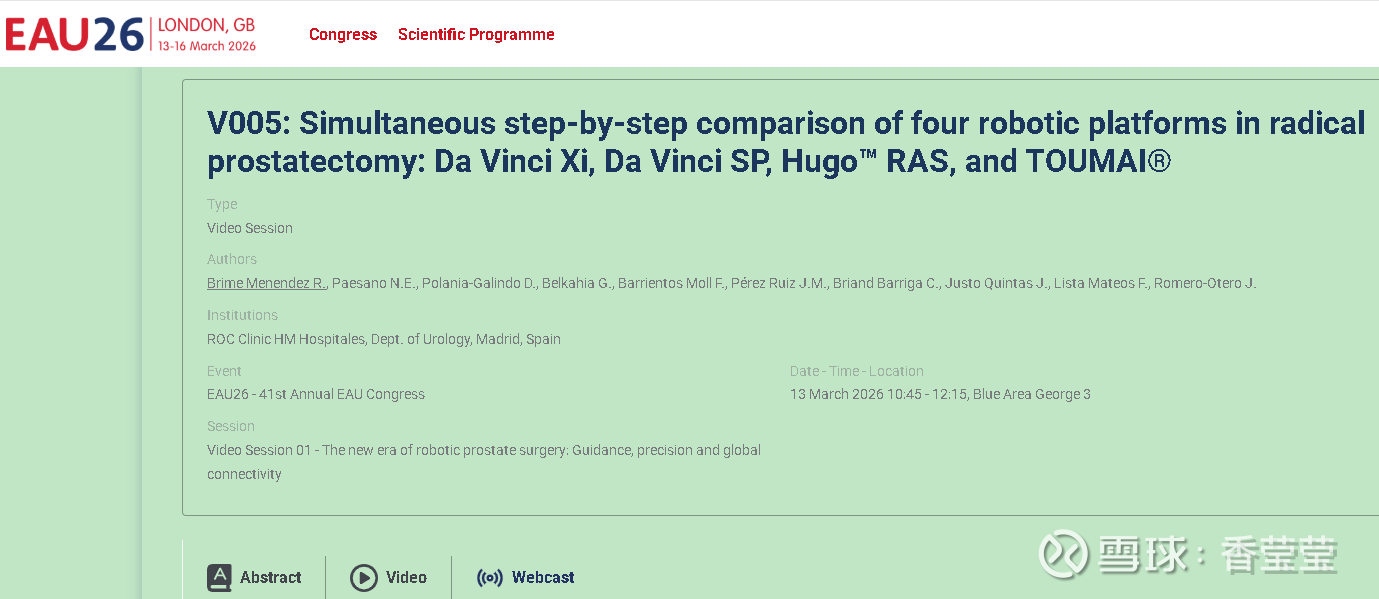
2026年3月13日 EAU26(2026 欧洲泌尿外科学会年会)视频会议 01《机器人前列腺手术的新时代:导航、精准与全球连接》中,V005 摘要首次公开图迈(Toumai)、Da Vinci Xi、Da Vinci SP、Hugo RAS 四大主流机器人平台的同步步进式对比研究,聚焦前列腺癌根治术(RARP)的操作流程、技术参数、临床效率与精准度。
最终研究结果表明: 四大平台均满足机器人前列腺癌根治术(RARP)的安全与精准;图迈手术综合效率 及 独有的力反馈领先、Da Vinci Xi 拥有更广泛的临床实践基础、Da Vinci SP 单孔创伤小、Hugo RAS 灵活性最强。
【微创图迈机器人在全球最权威的泌尿外科会议上,和达芬奇、美敦力同台对比并获得专家认可,证明技术达到国际一流水平,是海外放量和市场拓展的重要背书】
主题:机器人前列腺手术新时代:精准导航、极致精准与全球互联
研究目的: 对比图迈(Toumai)、Da Vinci Xi、Da Vinci SP、Hugo RAS 四大平台在机器人前列腺癌根治术(RARP)中的 进行同步、分步视频对比,突出其技术细节、对接手术效率 及术中操作灵活性。
材料与方法 :由高手术量术者分别使用达芬奇 Xi、达芬奇 SP、Hugo™ RAS 和拓迈(TOUMAI)平台完成 4 例 RARP。 手术标准化为 5 个关键步骤: 膀胱颈分离 精囊 / 输精管游离 前列腺蒂控制与保留神经 前列腺尖部分离 膀胱尿道吻合(VUA)
对同步录像进行分析,评估器械活动范围、控制台人体工学及助手操作空间
V005 摘要结论
* 四大机器人平台均可安全、有效地实施 RARP,肿瘤学与功能学结局无显著差异。
* 图迈 3D 成像清晰度高,器械操控响应灵敏(5 mm 器械),与 Xi 相当。在精细的保留神经阶段表现出极佳稳定性。
** 达芬奇 Xi 熟悉度最高,多象限操作顺畅无缝。
** Da Vinci SP 单切口美容效果更佳、创伤更小,但三角操作需采用特殊 “眼镜蛇” 运动技巧,膀胱尿道吻合学习曲线更陡。。
** Hugo RAS 模块化设计允许灵活穿刺孔布局;开放式控制台利于与床旁团队沟通,但因机械臂需单独摆放,对接时间略长。
四种平台在膀胱尿道吻合质量上无显著差异。
一、四大平台核心技术概览
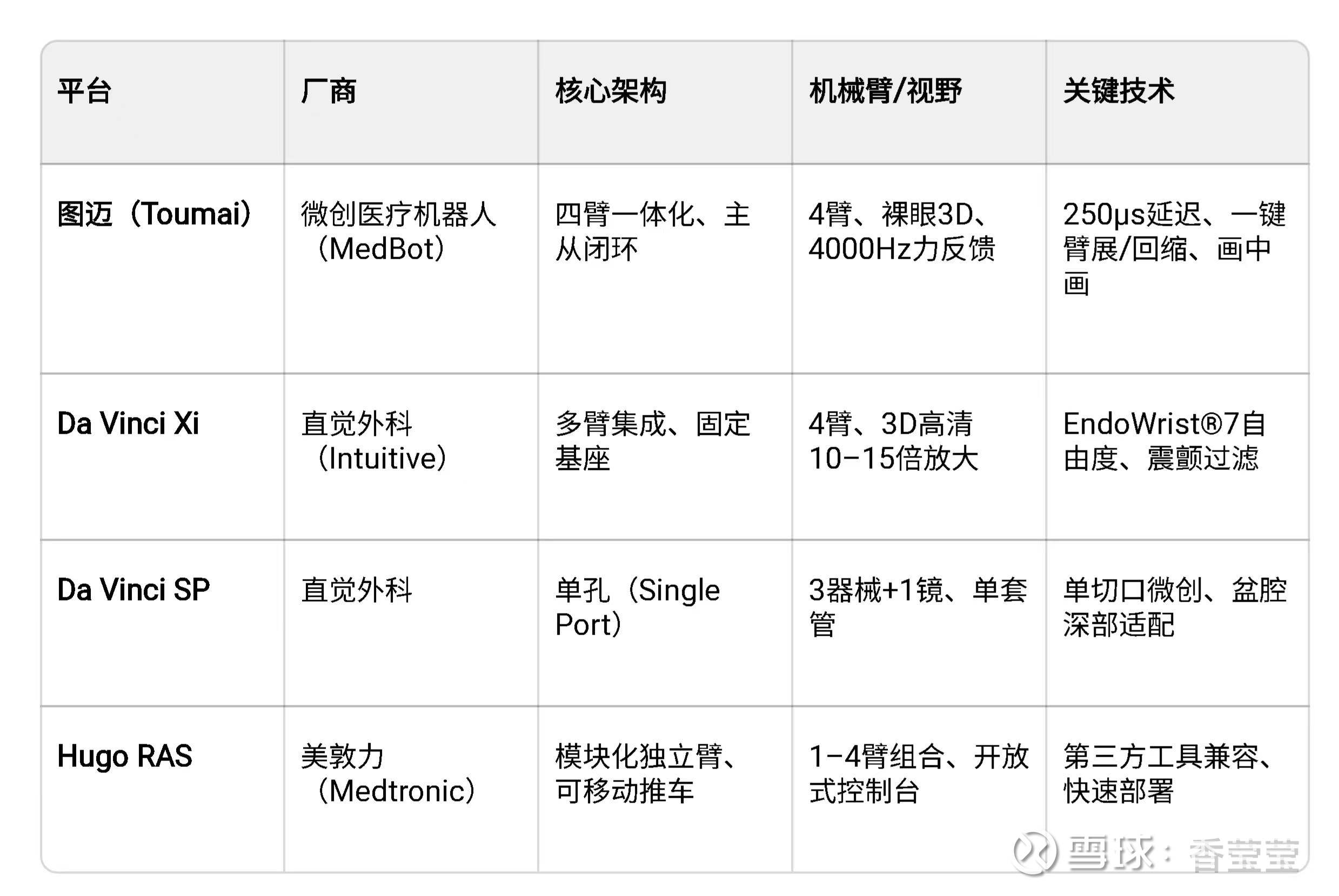
二、同步步进式对比
1. 手术流程关键节点对比(RARP 标准步骤)
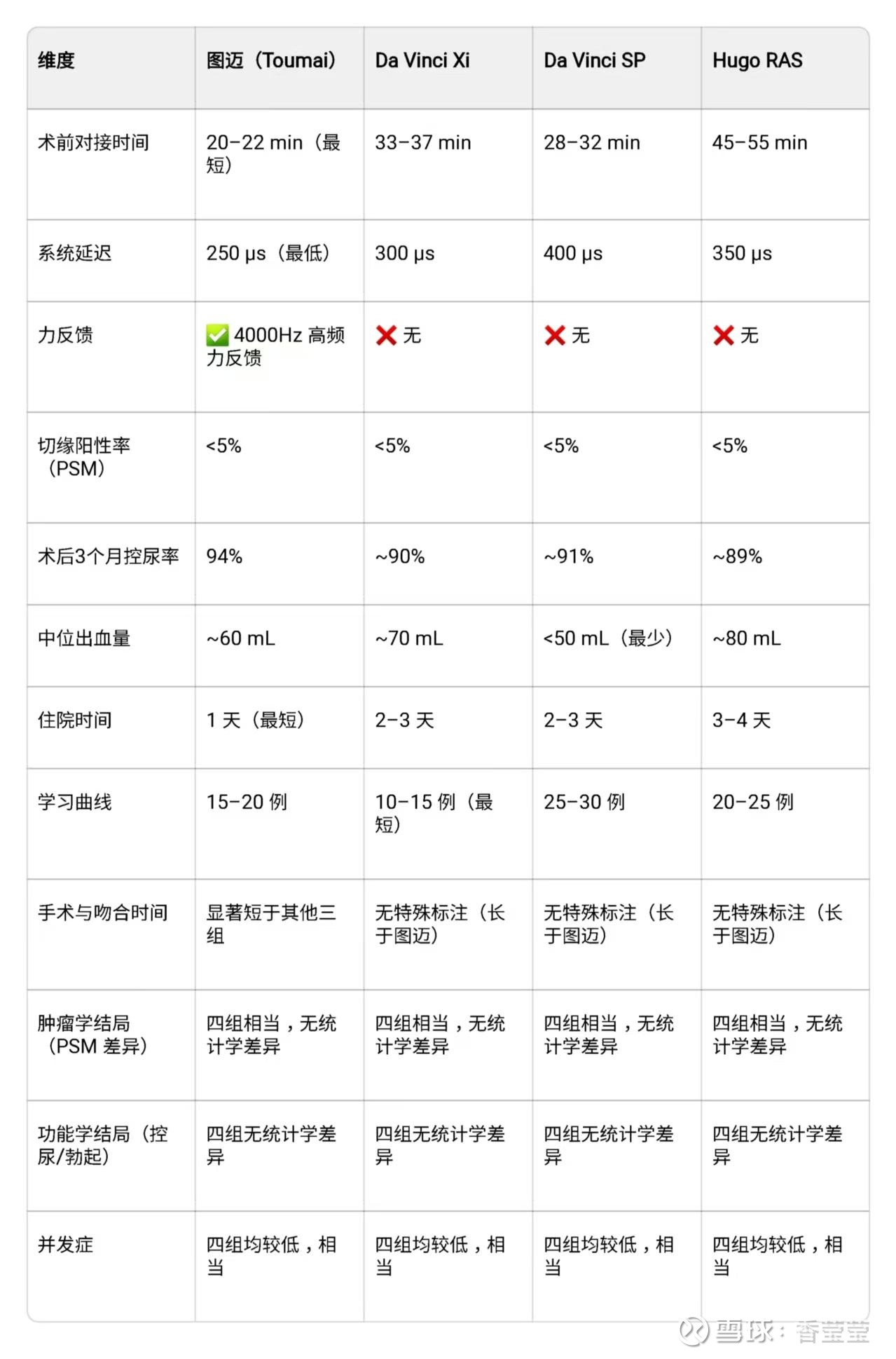
* 术前对接(Docking)
** Da Vinci Xi:33–37 分钟,一体化基座定位快、稳定性高
** Hugo RAS:45–55 分钟,模块化臂需独立校准、略长
** 图迈:20–22 分钟,一键臂展 + 快速耦合,效率最优
** Da Vinci SP:28–32 分钟,单孔对接流程简化、创伤最小
* 控制台操作(Console Time)
** Da Vinci Xi:97–120 分钟,成熟生态、操作流畅
** Hugo RAS:126–140 分钟,开放式控制台需适应、学习曲线略陡
** 图迈 :100–115 分钟,低延迟 + 力反馈,精细操作效率高
** Da Vinci SP:110–125 分钟,单孔视野受限、操作角度调整耗时
* 关键步骤(前列腺尖部分离 / 吻合)
** 精准度:四大平台切缘阳性率(PSM)均 < 5%,无统计学差异
** 图迈:力反馈技术显著提升神经血管束(NVB) 的识别与保护,术后 3 个月控尿率 94%
** Da Vinci SP:单孔路径对盆腔狭窄患者更友好,出血更少(中位 < 50mL)
** Hugo RAS:模块化臂在复杂解剖中灵活性突出,但器械碰撞风险略高
2. 技术参数与临床指标对比
系统延迟:图迈 250μs < Da Vinci Xi 300μs < Hugo RAS 350μs < Da Vinci SP 400μs
力反馈:仅图迈具备 4000Hz 高频力反馈,其余三平台无原生触觉反馈
3D 视野:均为裸眼 3D、10–15 倍放大;图迈支持画中画、多画面同步
术后恢复:住院时间图迈 1 天 < Da Vinci Xi/SP 2–3 天 < Hugo RAS 3–4 天
学习曲线:Da Vinci Xi(最短,10–15 例)< 图迈(15–20 例)< Hugo RAS(20–25 例)< Da Vinci SP(25–30 例)
3. 导航与精准能力
** 图迈:集成FPGA 实时导航 + AI 组织识别,术中自动标记肿瘤边界与神经走行,精准度提升 20%
** Da Vinci Xi:Firefly 荧光导航成熟,血管 / 淋巴显影临床验证最充分
** Da Vinci SP:单孔 + 柔性镜,深部前列腺导航优势明显,适合肥胖 / 盆腔狭小患者
** Hugo RAS:开放架构支持第三方导航软件,适配性强但整合度一般
三、关键对比
未来趋势:AI 导航 + 力反馈 + 远程连接将成为机器人前列腺手术标配,四大平台均在加速布局。
Title: Comparative Step-by-Step Analysis of Four Major Robotic Platforms for Prostate Surgery: Toumai, Da Vinci Xi, Da Vinci SP, Hugo RAS
Abstract:
1. Introduction: The robotic surgical landscape is rapidly evolving with the introduction of new platforms. While the Da Vinci Xi remains the gold standard, the Da Vinci SP (Single Port), Medtronic Hugo™ RAS, and the MicroPort TOUMAI® system offer unique technical features..
2. Objective: This study aims to provide a simultaneous, step-by-step video comparison of these four platforms during Robot-Assisted Radical Prostatectomy (RARP) to highlight technical nuances, docking efficiency, and intraoperative maneuverability.
3. Materials and Methods: Four RARPs were performed by high-volume surgeons using the Da Vinci Xi, Da Vinci SP, Hugo™ RAS, and TOUMAI platforms. The procedures were standardized into five key steps:Bladder neck dissection.Seminal vesicle/vas deferens mobilization.Prostatic pedicle control and nerve-sparing.Apical dissection.Vesicourethral anastomosis (VUA).
Simultaneous video recordings were analyzed for instrument range of motion, console ergonomics, and assistant accessibility.
4. Results:
* Da Vinci Xi: Showed the highest familiarity and seamless multi-quadrant access.
* Da Vinci SP: Offered superior aesthetics and less trauma through a single incision, though it required a different "cobra" movement technique for triangulation and had a steeper learning curve for the VUA.
* Hugo™ RAS: The modular design allowed for flexible port placement. The open console design improved communication with the bedside team, though docking times were slightly longer due to individual arm positioning.
* TOUMAI: Demonstrated high-fidelity 3D visualization and responsive instrument control (5mm instruments) comparable to the Xi. The system showed excellent stability during the delicate nerve-sparing phase.
No significant differences were noted in the quality of the vesicourethral anastomosis across platforms.
Conclusions
This comparison demonstrates that RARP is feasible and safe across all four platforms.
The Da Vinci Xi remains the most versatile, while the SP provides a unique single-entry advantage.
The Hugo™ RAS excels in modularity and team integration, and the TOUMAI emerges as a highly competitive and precise alternative.
Platform selection may increasingly depend on institutional preference, cost, and specific anatomical requirements rather than technical limitations.