The global competition for space resources is accelerating.
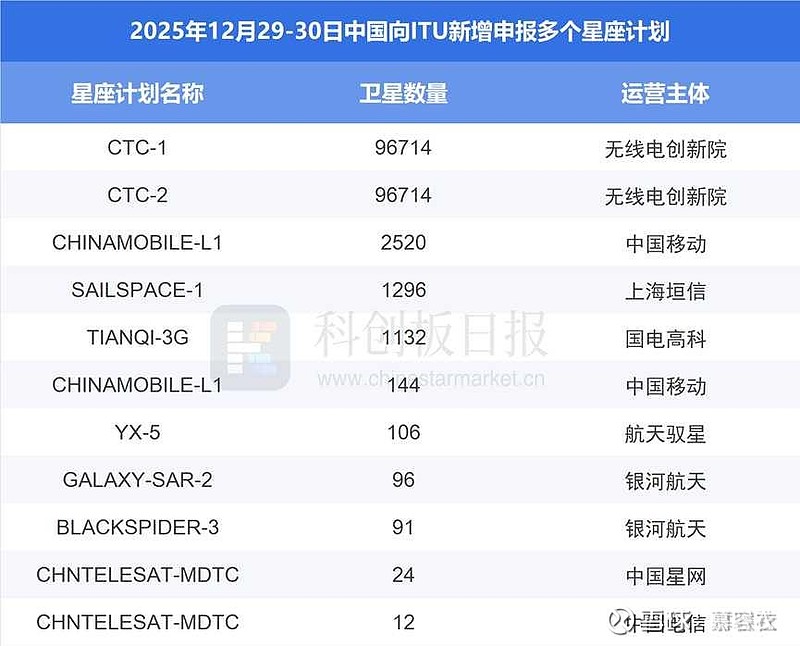
According to the official website of the International Telecommunication Union (ITU), Japan announced a multi-satellite constellation plan with a total of more than 200,000 satellites to the ITU in the last week of 2025.
The comprehensive expansion of satellite spectrum orbit application and operation entities involves many enterprises and institutions such as China Star Network, Shanghai Yuanxin, China Mobile, China Telecom, Wireless Spectrum Development and Utilization Technology Innovation Research Institute, Guodian High-tech, Aerospace Yuxing, Galaxy Aerospace, etc.
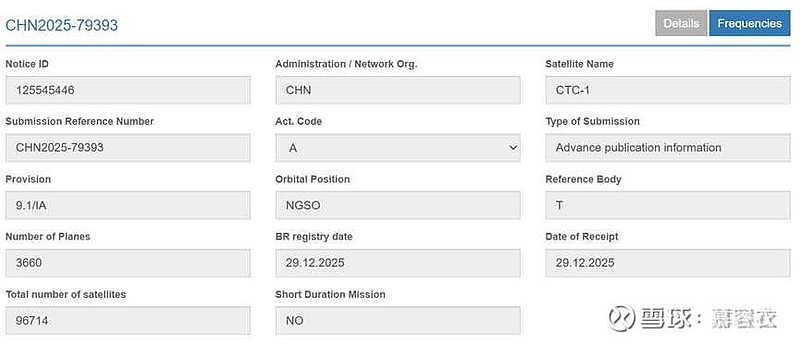
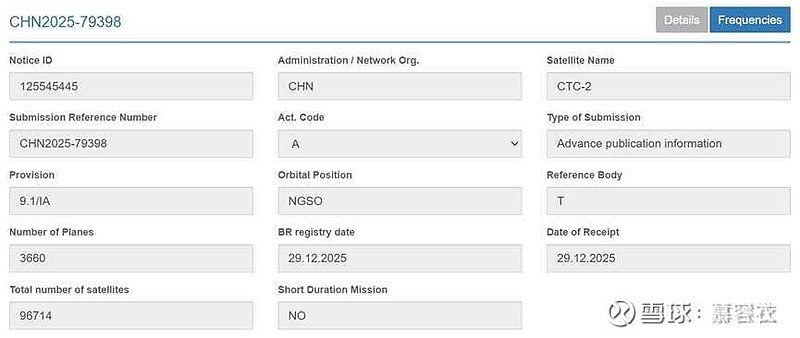
The two largest constellations are the CTC-1 and CTC-2 of the Institute of Radio Innovation, both of which have 96,713 satellites.
According to public information, the Radio Innovation Research Institute was registered on December 30, 2025 in Xiong'an New Area, and is China's first new research and development institute in the field of radio management technology, with the goal of achieving technological innovation and transformation.
The day before registration (December 29), two large satellite constellation projects, CTC-1 and CTC-2, submitted an application to the International Telecommunication Union in the name of the Radio Innovation Institute.
The institute is sponsored by the National Radio Monitoring Center, the Hebei Xiong'an New Area Management Committee, The project is jointly built by the Hebei Provincial Bureau of Industrial Informatization, China Satellite Network Group Co., Ltd., Nanjing University of Aeronautics and Astronautics, Beijing Jiaotong University, and China Electronic Science and Technology Group Co., Ltd., with the aim of serving the satellite Internet industry, researching electromagnetic space technology, and excavating the value potential of spectrum resources. It is a common innovation platform for government, industry, academia, scientific research and application, integrating the incubation of achievements and industry empowerment, and promoting the efficient use of wireless spectrum resources and technological innovation.
The International Telecommunication Union is the United Nations agency responsible for information and communication technology affairs, and is responsible for the allocation and management of global radio spectrum and satellite orbit resources.
In 2019, the International Telecommunication Union updated the deployment node requirements for constellation operators. In other words, seven years after submitting the launch materials, non-geostationary satellite constellation operators must launch 10% of the satellites within two years and 50% within five years, and all deployments must be completed within seven years. If the constellation program does not launch enough satellites at these nodes, or fails to launch enough satellites within 14 years, its spectrum rights will be reduced proportionally according to the actual number of launches at that time.
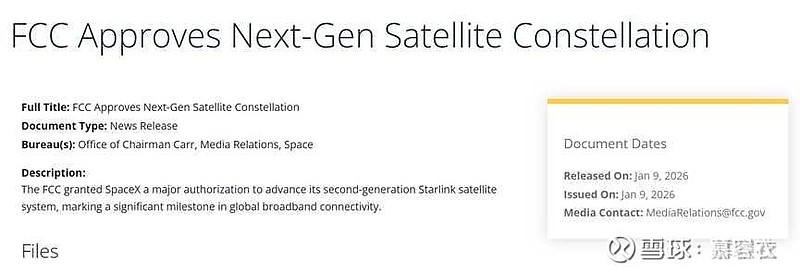
On January 9, local time, the Federal Communications Commission (FCC) approved the next-generation satellite constellation plan, allowing SpaceX to deploy and operate 7,500 second-generation Starlink satellites on top of the existing 8,000 satellites.
The global competition for space resources is accelerating.
According to the official website of the International Telecommunication Union (ITU), Japan announced a multi-satellite constellation plan with a total of more than 200,000 satellites to the ITU in the last week of 2025.
The comprehensive expansion of satellite spectrum orbit application and operation entities involves many enterprises and institutions such as China Star Network, Shanghai Yuanxin, China Mobile, China Telecom, Wireless Spectrum Development and Utilization Technology Innovation Research Institute, Guodian High-tech, Aerospace Yuxing, Galaxy Aerospace, etc.
The two largest constellations are the CTC-1 and CTC-2 of the Institute of Radio Innovation, both of which have 96,713 satellites.
According to public information, the Radio Innovation Research Institute was registered on December 30, 2025 in Xiong'an New Area, and is China's first new research and development institute in the field of radio management technology, with the goal of achieving technological innovation and transformation.
The day before registration (December 29), two large satellite constellation projects, CTC-1 and CTC-2, submitted an application to the International Telecommunication Union in the name of the Radio Innovation Institute.
The institute is sponsored by the National Radio Monitoring Center, the Hebei Xiong'an New Area Management Committee, The project is jointly built by the Hebei Provincial Bureau of Industrial Informatization, China Satellite Network Group Co., Ltd., Nanjing University of Aeronautics and Astronautics, Beijing Jiaotong University, and China Electronic Science and Technology Group Co., Ltd., with the aim of serving the satellite Internet industry, researching electromagnetic space technology, and excavating the value potential of spectrum resources. It is a common innovation platform for government, industry, academia, scientific research and application, integrating the incubation of achievements and industry empowerment, and promoting the efficient use of wireless spectrum resources and technological innovation.
The International Telecommunication Union is the United Nations agency responsible for information and communication technology affairs, and is responsible for the allocation and management of global radio spectrum and satellite orbit resources.
In 2019, the International Telecommunication Union updated the deployment node requirements for constellation operators. In other words, seven years after submitting the launch materials, non-geostationary satellite constellation operators must launch 10% of the satellites within two years and 50% within five years, and all deployments must be completed within seven years. If the constellation program does not launch enough satellites at these nodes, or fails to launch enough satellites within 14 years, its spectrum rights will be reduced proportionally according to the actual number of launches at that time.
On January 9, local time, the Federal Communications Commission (FCC) approved the next-generation satellite constellation plan, allowing SpaceX to deploy and operate 7,500 second-generation Starlink satellites on top of the existing 8,000 satellites.