2026-03-10【核电】冯德莱恩在第二届核能峰会上的讲话:反对核能是战略性错误

尊敬的马克龙总统,感谢您主持这次至关重要的峰会。
总统们,
首相们
总干事格罗西
阁下们,
女士们,先生们,
欧洲的电价结构性过高。这至关重要。因为价格合理的电力不仅关乎公民的生活成本,更关乎我们的工业竞争力。未来的产业将建立在价格合理的电力之上。机器人和人工智能将推动下一波创新和生产力提升,惠及所有工业领域。而这两者都需要充足且价格合理的电力。因此,工业竞争力将越来越取决于谁能更好地生产、运输、储存和利用充足且价格合理的电力。
但欧洲既不是石油生产国,也不是天然气生产国。在化石燃料方面,我们完全依赖昂贵且波动较大的进口,这使我们在结构上处于相对于其他地区的劣势。当前的中东危机鲜明地提醒我们,这种劣势造成了多么严重的脆弱性。
但我们拥有本土的低碳能源:核能和可再生能源。如果我们现在就做对了,它们可以共同成为能源独立、供应安全和竞争力的保障。过去十年,我们在可再生能源领域取得了巨大进展。太阳能光伏和风能已经在欧盟的能源结构中取代了化石燃料。我们的欧洲风力涡轮机制造商已成为全球巨头。他们正将欧洲制造的高科技产品出口到世界各地。不幸的是,核能的情况却截然不同。1990年,欧洲三分之一的电力来自核能,而如今这一比例仅接近15%。我认为,核能份额的下降是欧洲自身选择的结果,放弃这种可靠、经济的低排放能源是一个战略错误。
这种情况应该改变,原因有二。首先,核能和可再生能源都扮演着关键角色。这并非二选一的问题——二者结合才能发挥最大效力。因为我们需要的是最佳的整体能源系统——清洁、经济、可靠且符合欧洲标准。可再生能源发电成本最低,但其波动性较大,受日照和风力影响,而且有时最佳地点远离工业需求中心。因此,我们还需要投资储能和需求侧管理,并完善电网。
核能可靠,全年无休地提供电力。因此,最高效的系统是将核能与可再生能源相结合,并以储能、灵活性和电网为支撑。第二个原因是,欧洲一直是核技术的先驱,并有可能再次引领世界。下一代核反应堆有望成为欧洲高科技高价值出口产品。而这正是我们今天齐聚巴黎的原因。
近年来,核能在全球范围内复兴,欧洲也希望参与其中。去年,我们修改了国家援助规则,扩大对核裂变和核燃料的支持。我们成立了全球首个小型模块化反应堆产业联盟,并提议在下一年度预算中投资超过50亿欧元用于聚变研究,特别是通过国际热核聚变实验堆(ITER)。
但经过多年投资下滑,我们需要更多投入来扭转局面。因此,今天我们推出一项新的欧洲小型模块化反应堆战略。我们的目标很简单:我们希望这项新技术能在2030年代初在欧洲投入运营,使其与传统核反应堆共同发挥作用,构建一个灵活、安全、高效的能源系统。
我们提出三项主要措施。首先,我们需要简明易懂的规则。我们将建立监管沙盒,以便企业测试创新技术。同时,我们将与成员国合作,确保规则在各国之间保持一致。逻辑很明确:当技术部署安全时,其部署必须简便易行——在整个欧洲范围内都应如此。
其次,我们需要调动投资。今天,我宣布我们将设立2亿欧元的担保基金,用于支持对创新核技术的私人投资。这笔资金将来自我们的碳排放交易体系。我们不仅希望降低对这些低碳技术的投资风险,也希望向其他投资者发出明确的信号,鼓励他们加入。这是改善欧洲核能行业投资环境的更广泛努力中的具体举措之一。
第三,这必须是欧洲共同努力的结果。模块化反应堆的商业模式需要规模化。因此,跨越欧洲边界的合作至关重要。正因如此,我们将与成员国合作,协调其监管框架,加快审批流程,并培养该行业所需的技能。成员国企业和值得信赖的合作伙伴也应携手合作。例如,他们可以共同投资于研究、测试设施以及构建欧洲核燃料价值链。
但我们的目标不仅限于小型模块化反应堆。我们还需要加强更广泛的核能生态系统——从燃料到技术,从供应链到技能。这也是我们清洁能源投资战略的目标——降低能源成本,加速清洁技术的部署,并创造更多融资机会。
女士们,先生们,
核能技术竞赛已经打响。但我们深知,欧洲拥有引领潮流所需的一切。我们拥有五十万核能领域高技能人才——远超美国和中国。我们在模块化反应堆领域引领全球创新。如今,我们雄心勃勃,力求以迅猛之势和规模,将欧洲打造成为下一代核能的全球中心。
谢谢。
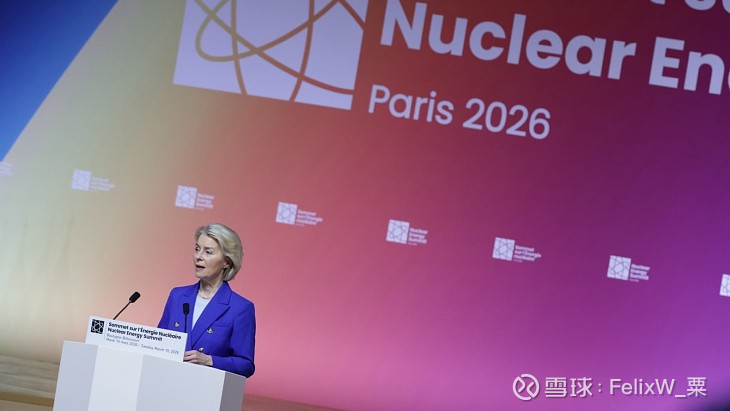
European Commission President Ursula von der Leyen has announced new financial support for innovative nuclear technologies and a European Union strategy for small modular reactors which aims to see them operational in Europe by the early 2030s.
Von der Leyen said the EUR200 million (USD232 million) investment, funded via the Emissions Trading System, will help the European Union's "home-grown low-carbon energy sources: nuclear and renewables … become the joint guarantors of independence, security of supply, and competitiveness - if we get it right - now".
In a speech to the Nuclear Energy Summit being held in Paris, she added: "In 1990 one-third of Europe's electricity came from nuclear, today it is only close to 15%. This reduction in the share of nuclear was a choice, I believe that it was a strategic mistake for Europe to turn its back on a reliable, affordable source of low-emissions power."
She said that with the EU not being an oil or gas producer "the current Middle East crisis gives a stark reminder of the vulnerabilities this creates … nuclear energy is reliable, providing electricity all year, around the clock. So the most efficient system combines nuclear and renewables, and is underpinned by storage, flexibility, and grids … Europe has been a pioneer in nuclear technology and could once again lead the world in it. Next-generation nuclear reactors could become a European high-tech high-value export".
A new European Strategy for Small Modular Reactors will have three main elements, she said: "First, we need simple rules. We will create regulatory sandboxes so that companies can test innovative technology. And we will work with Member States so that rules are aligned across borders. The logic is clear. When it is safe to deploy, it must be simple to deploy – all across Europe.
"Second, we need to mobilise investment. Today I can announce that we will create a EUR200 million guarantee to support private investment in innovative nuclear technologies. And the resources will come from our Emissions Trading System. Not only will we derisk investments in these low-carbon technologies, we also want to give a clear signal for other investors to join. This is one concrete step and part of a broader effort to improve the investment conditions for Europe's nuclear sector.
“Third, this must be a joint European effort. The modular reactors' business model needs scale. So cooperation across European borders is vital. This is why we will work with Member States to align their regulatory frameworks, speed up permitting, and develop the skills the sector needs. Companies from Member States and trusted partners should also come together. For instance, they could co-invest in research, in testing facilities and in creating European value chains for nuclear fuels."
As part of the EU's place in the "nuclear tech race" here would also be strengthening of the "wider nuclear ecosystem - from fuel to technology, from supply chains to skills".
European Union member states are split on the issue of nuclear energy - it is generated in 13 of the 27 EU member states and its vocal opponents have included Germany and Austria. But a growing number of member states are developing plans for new capacity, as well as some countries rethinking their previous phase-out policies.
A Nucleareurope-commissioned report published last year said that with a generating capacity of around 106 GWe, the EU's nuclear sector contributes EUR251.2 billion per year to the bloc's economy and generates yearly public revenues of about EUR47.6 billion, with more than 883,000 jobs sustained.
#今日话题# #核电概念股# #天然铀# $中广核矿业(01164)$ $Cameco Corp(CCJ)$ $铀矿ETF-Global X(URA)$