康 · 学术 | Pharmaron Launches the 60th Pharmaron Virtual Lecture

(来源:康龙化成)
转自:康龙化成
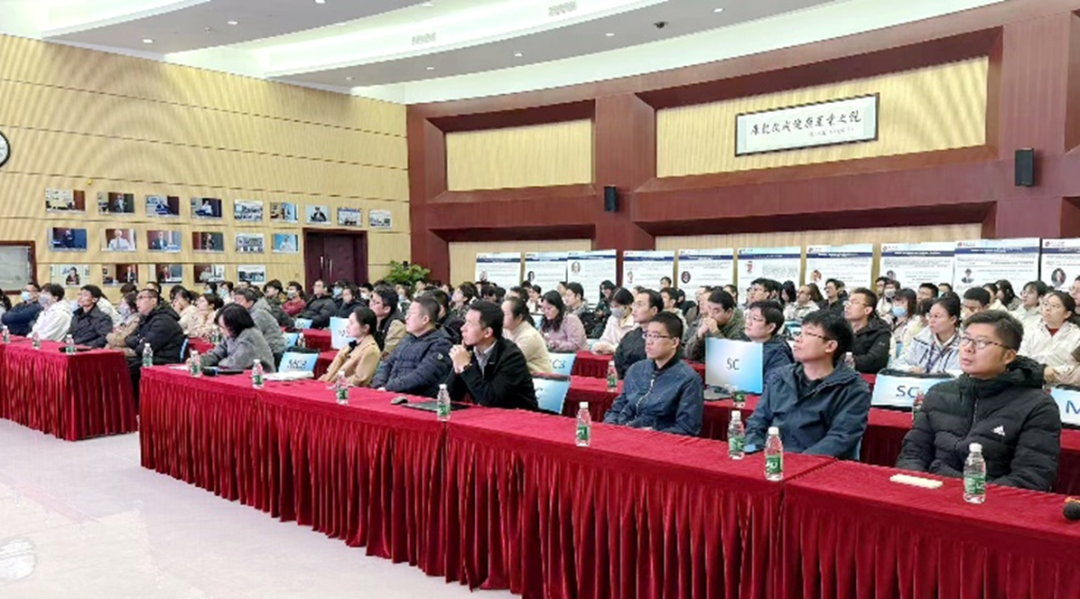
康龙化成举办第六十期“合成与药物化学前沿”名师线上讲座
2025年11月13日,北京——美国威斯康星大学麦迪逊分校的Shannon S. Stahl教授做客康龙化成第六十期“合成与药物化学前沿”名师线上讲座,报告主题为“有机电化学合成的原理和应用”。报告重点介绍了:1)氮氧化物介导的电化学氧化反应原理及应用;2)锰-卟啉介导的电化学氧原子转移反应合成亚砜;3)醌介导氢阳极应用于镍催化交叉亲电偶联(XEC)反应。

首先,Shannon S. Stahl教授介绍了氮氧化物介导电化学氧化反应的原理,以氮氧化物作为预催化剂,可以避免常规的电子转移-质子转移-电子转移(ET-PT-ET)过程,通过电化学氧化促进底物的直接氢转移,因此能在较低的电极电势下进行氧化反应。应用此策略,Stahl教授发展了氮氧化物介导的C-H键官能化的庄野氧化反应(Shono Oxidation reaction),大大扩展了官能团的兼容性和底物适用范围。同时,该策略可用于200克规模的流动电化学合成,使用分隔流通池,以≥97%的对映体纯度合成左乙拉西坦的关键中间体。
基于对介导电化学氧化反应体系的深入研究,Shannon S. Stahl教授课题组使用锰卟啉作为有效的预催化剂,氧气作为氧源,成功地将电化学氧还原和水氧化进行配对,通过在两个电极上生成活性锰-氧物种,实现用一当量氧分子氧化两当量硫醚成为亚砜的高选择性氧化反应。同时,Stahl教授课题组还开发了水作为氧源的锰介导的硫醚电化学氧化为亚砜反应,并且开发了电化学平行筛选平台,将其应用于药物相关硫醚库。
最后,Shannon S. Stahl教授介绍了课题组在镍催化交叉亲电偶联领域的研究成果与进展。详细阐述了金属还原剂和有机还原剂在该反应中的作用与差别。但是鉴于通常会使用金属作为牺牲阳极的限制,并不适用于大规模生产。因此,该课题组发展了一种醌介导的氢阳极,通过将蒽醌介质的热催化氢化与蒽氢醌的电化学氧化配对实现了H2的间接电化学氧化。他们将这种醌介导的氢阳极应用于交叉亲电偶联(XEC)反应当中,成功地实现了C(sp3)-C(sp2)键的构建。此外,作者还将其应用于循环流动反应器,从而实现了多种药物中间体的百克级规模合成。
会后,Shannon S. Stahl教授在问答环节中与听众进行了热烈的讨论。

Frontiers in Synthetic and Medicinal Chemistry
--The 60th Pharmaron Virtual Lecture
Beijing, China, Nov. 13, 2025 - Pharmaron held its 60th virtual lecture in the Frontiers of Synthetic and Medicinal Chemistry series, delivered by Prof. Shannon S. Stahl from the University of Wisconsin-Madison. The presentation was titled “Principles and Applications of Organic Electrosynthesis.” The talk focused on three areas: 1) Principles and applications of aminoxyl-mediated electrochemical oxidation reactions; 2) Manganese-mediated electrochemical oxygen-atom-transfer reactions to synthesize sulfoxide compounds; 3) Application of quinone-mediated hydrogen anodes in nickel-catalyzed cross-electrophile coupling (XEC) reactions.
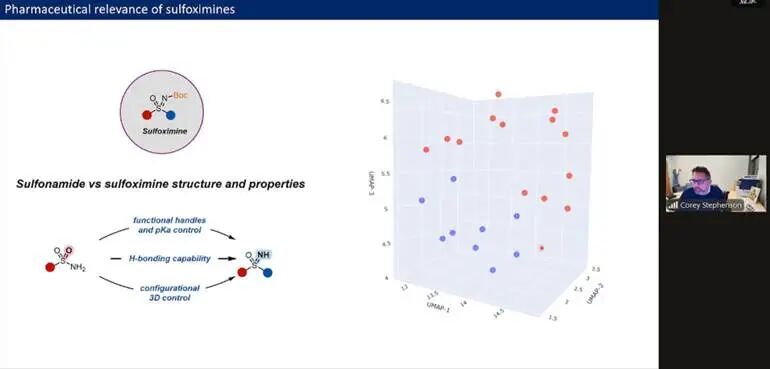
Prof. Shannon S. Stahl started his lecture with an introduction of the principle of aminoxyl-mediated electrochemical oxidation reactions. An aminoxyl mediator was used as a pre-catalyst to bypass the conventional ET-PT-ET sequence by undergoing electrochemical oxidation that promotes direct hydride transfer from the substrate to operate the oxidation reactions at much lower electrode potentials. By applying this strategy, his group developed aminoxyl-mediated Shono oxidation reaction for C-H bond functionalization, which greatly expanded the compatibility of functional groups and the range of substrates. Moreover, this approach was showcased in 200-g scale flow electrochemical synthesis, employing divided flow cells to synthesize the key intermediate of Levetiracetam with ≥97% enantiomeric purity.
Based on in-depth research for mediated electrochemical oxidation reactions, his group successfully paired electrochemical oxygen reduction and water oxidation by employing a manganese-tetraphenylporphyrin as a catalyst and O2 as the oxygen source to generate a reactive manganese-oxo at both electrodes. This resulted in a highly selective oxidation reaction that converted two equivalents of thioether to sulfoxide with one equivalent of oxygen molecules. At the same time, his group developed a manganese-tetraphenylporphyrin-mediated electrochemical oxidation of thioethers to sulfoxides using water as the oxygen source. In addition, an electrochemical parallel screening platform was developed and applied to a library of drug-related thioethers.
Finally, Professor Shannon S. Stahl shared his group's research on nickel-catalyzed cross-electrophile coupling (XEC) reactions, presenting the effect and differences of metal reductants and organic reductants in this reaction clearly. However, due to the limitation that metal was used as sacrificial anode, this did not apply to scale-up reactions. The group developed a mediated H2anode that achieves indirect electrochemical oxidation of H2 by pairing thermal catalytic hydrogenation of an anthraquinone mediator with electrochemical oxidation of the anthrahydroquinone. This quinone-mediated H2anode was used to support nickel-catalysedcross-electrophile coupling successfully to construct C(sp3)-C(sp2) bond. In addition, his group applied it to a continuous flow reactor, achieving the synthesis of pharmaceutical intermediates at hundred-gram scale.
After the lecture, Professor Shannon S. Stahl had a lively discussion with the audience in the Q&A session.